Name: Quadraphonic Brewing Company: Barrel of Monks Brewing Company Location: Boca Raton, FL Style: Belgian Quadrupel ABV: 10.5%
I had to buy one of these glasses. Too bad I couldn’t take any of the beer home in my carry-on.
Beer Review: Barrel of Monks’ Quadraphonic
From Barrel of Monks’s beers page (which changes regularly):
The Quadrupel is the granddaddy of the abbey-style ales. Typically, they are dark, strong ales bursting with flavors such as dark fruit, chocolate and raisins. Our Quadraphonic is no exception to this. This dense beer hides its 10.5% well with a deep brown color and a long rich finish. The Quadrupel is a beer designed for celebration and decadence.
Although traveling for work can be a bit wearying, it can also be rewarding. You can build great new business relationships and strengthen existing business relationships. Sometimes, you’re fortunate enough to be traveling with some like-minded people who enjoy well-crafted beer, and sometimes, you’ll find a great brewery when you’re traveling. Such is the case with today’s beer from Barrel of Monks brewery out of Boca Raton, Florida. This is standout brewery because it brews exclusively Belgian style ales and an outstanding brewery because their beers (at least the two I had, including today’s beer being reviewed) are superb examples of their style.
The Belgian Quadrupel, one of the biggest of all beers and the biggest of the Belgian Abbey styles. A world renowned style that derives much of its flavor from the magic of the yeast, it is a style not many breweries attempt and a style you’ll also find aged in some kind of oak barrel. Sometimes; however, you want the beer in its pure form un-enhanced by the barrel. Quadraphonic from Barrel of Monks in Boca Raton, Florida more than amply fits that bill.
Aside from the “Belgian Strong Dark Ale” the Quadrupel is the darkest of the Belgian ales that shows in the picture above. The bartender at Barrel of Monks poured the beer perfectly, allowing for a big fluffy head that gave off a beautiful earthy scent that was extremely inviting.
The first sip is a delightful “wow” and does what a good beer should – encourages to you drink more. I found the typical stone fruit flavors to be present, hints of plum and raisin with some figginess. Those first sips tell you this is a complex beer. As it settled to room temperature, I caught a hint of cherry too. By the time the glass was empty, I was both satisfied and sad. The beer was delicious, multifaceted enough that the flavor profile evolved in subtle, pleasing ways over the course of finishing it. The sadness should be obvious – the glass was empty.
This beer is on par with the Quadrupels I’ve had in the past. Only one of those was from an actual Belgian brewery (St. Bernardus), but I’ve also had renowned Quadrupels from Brewery Ommegang (Three Philosophers) as well as Weyerbacher (Quad) and Victory (V12). I’d easily rank Quadraophonic near or at the top of the Quadrupels I’ve had since joining untappd. I expect when I do my best of 2019 beers, this will be making an appearance.
Quadraophonic is quite simply, a delicious beer. What I wasn’t expecting was for how well the big ABV of this beer (10.5%) isn’t overpowering. On the whole, that’s what makes Quadraphonic such a great beer – it has all the elements you’d expect from a Quadrupel, without any element overpowering the other.
Everyone loves fresh beer, but obviously not as much as you do. You went straight to the source. That’s a beer at 40 different venues categorized as a Brewery.
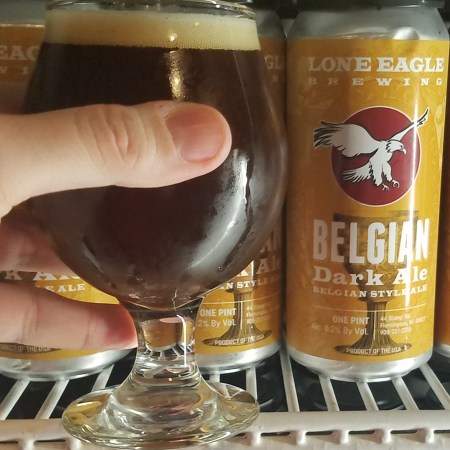
Name: Belgian Dark Strong Brewing Company: Lone Eagle Brewing Company Location: Flemington, NJ Style: Belgian Dark Strong ABV: 8.2%
The beer came out of the tap at the brewery, but the four packs of cans are sold there, too. And most liquor stores in NJ.
From Lone Eagle’s beers page (which changes regularly):
This Belgian Ale has notes of dark fruits such as figs and plums as well as some slight oak aroma and flavors. It has a nice malty taste with a slightly dry finish. After this beer was done fermenting we aged if on rum soaked oak chips from our friends at Skunktown Distillery.
Lone Eagle was one of the first breweries I featured in a brewery spotlight here at the Tap Takeover, so it is about time I got around to reviewing one of their beers. Especially since I’ve been there quite frequently. Be that as it may, here’s a relatively new beer from them, first brewed in Late October, I think.
One thing I’ve appreciated about Lone Eagle is the variety of styles they have on tap. You’re not going to be drowned in 10 out of the 14 taps being IPAs. This is a very classic style, and one that is really suited for cold weather / Winter months. The beer isn’t exactly black like a stout, but you could say it is almost a Belgian approximation of a stout (as they typically don’t brew stouts). Rather the beer is almost black with hints of deep crimson. I couldn’t get the best picture of the beer since the brewery was very crowded, the upstairs loft had a band playing Christmas Songs and Santa was in attendance, too.
I couldn’t get much of a nose on the beer, but could smell a bit of sweetness and some of the hints of the typical flavors evoked by Belgian yeast.
First sip gave me a little bit of a wow – more flavorful than I would have expected. Sweetness and some spice mix up nicely in the glass and in the mouth. The 8.2%ABV is fairly typical of the style, so the little bit of booziness shouldn’t be a surprise. I suspect that may also come from the rum chips that were soaking in the beer because there is a little sweetness on the finish atypical from other Belgian Darks I’ve had in the past.
As I continue to make my way through the beer, the full flavor profile really comes together. You’ve got the characteristic spice & esters from the yeast adding stone fruity flavors to the mix. You’ve got a hint of booziness from the inherit presence of the alcohol and enhancement of the rum-soaked oak chips. All told for me, a pleasing beer.
Like many of Lone Eagle’s beers, this one is out in distribution throughout much of New Jersey and maybe Pennsylvania and New York…or wherever their footprint reaches. As I said, I’m impressed with the variety of styles Lone Eagle attempts and while not all are out of the park hits, just about all of them have been enjoyable interpretations of the style. Which is the case for this beer.
I also appreciate the local/community collaboration with Skunktown Distillery, which is also in Flemington. I haven’t visited the distillery yet myself. But that collaborative and community spirit is a great strength of Lone Eagle and has been since day one.
For all the new beers it is fun to try, going back to the classics, American “Craft Beer” Classics if you will, can also be fun. These are beers many folks have probably had, beers that are fairly widely available, and beers that have been in the market for upwards of ten to fifteen years. In other words, beers that have had a significant impact on the American Craft Beer landscape.
Christmastime…although there are more than enough Christmas and Winter specific beers available you could likely go a few years with trying something new every Christmas, the classics are great options too. No beer is more classic with regard to Christmas in America than Anchor’s Our Special Ale / Merry Christmas & Happy New Year beer. This really shouldn’t be a surprise considering Anchor Brewing helped to ignite the “craft beer” and/or “microbrewing” movement over 50 years ago.
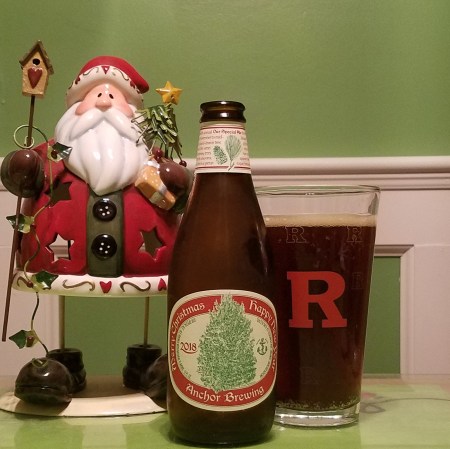
Even Santa Claus stands at attention for an iconic beer.
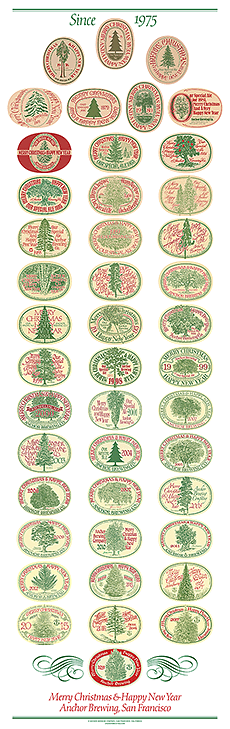
2018 marks the 44th year Anchor has brewed their Christmas beer, having first brewed a version of this beer in 1975. I say “A” version because every year the recipe is slightly different as is the label. Each year a different tree adorns the label and the beer has different tasting notes. I’ve had each vintage for four years in a row according to my untappd check-ins and I know I had a few versions of the beer before joining untappd. In other words, I’ve been having a version of this beer for many years.
Image courtesy of Anchor’s Facebook page
Here’s what Anchor has to say about the 2018 version of Merry Christmas & Happy New Year:
Our annual Christmas Ale is a subtly spiced and sumptuously smooth winter warmer. This year’s brew marks the 44th annual release of this Anchor holiday tradition.
Back in 1975, Anchor released the first holiday beer in America since Prohibition. Year after year, Anchor creates a new, secret recipe with a unique hand drawn label for their Christmas Ale, but the intent with each brew remains the same: joy for the changing seasons and celebration of the newness of life. With a heavily guarded, confidential recipe, Christmas Ale is sold only from early November to mid-January. This highly anticipated seasonal delight is complex and full in flavor, packed with toasty cocoa notes, roasted malts and strong aromas of resinous pine.
Our 2018 Christmas Ale has varying specialty malts, lending rich flavors of brûléed sugars, holiday spices and freshly baked banana bread with a velvety finish. The aromatics are quintessential for the holiday season: nutty candied yams and resinous pine. It pours a nice mahogany brown color with a fluffy, tan head.
As each Christmas Ale recipe evolves, so does its hand drawn packaging, created by long-time Anchor Illustrator Jim Stitt, who has been creating Anchor’s Christmas Ale labels since 1975. Since ancient times, trees have symbolized the winter solstice when the earth, with its seasons, appears born anew. For the 2018 release, Stitt created a brimming Korean Pine Tree for the label. Native to both North and South Korea, the Korean Pine Tree is a symbol of peace and a reminder of the spirit of the season. It flourishes in the picturesque botanical gardens just north of San Francisco, Anchor’s home base.
A few years back, Anchor Brewing put together this video about their iconic Christmas Beer:
I found this year’s version to be good, but a little thinner than previous years. There was a nice amount of spice throughout the beer, and sweeter finish than I’ve come to expect. For me, the biggest difference was in the color – the beer poured closer to an amber ale whereas I recall the beer in the past being darker, bordering on stout territory. I think the version I enjoyed the most was the 2016 version, the malt, spice, and sweet elements I thought came together almost perfectly and the beer was darker than this year’s. I think when the recipe leans more on the darker roasted malts that produce a beer that is almost knocking on the door of a stout, it works better for me. Not that a beer like this *should* have full stout characteristics at all, but it is almost stout-adjacent in looks.
One thing some people do with this beer is set one or two aside to age and have 3 or 4 years in a row for a gathering or vertical tasting. That’s more common with barrel-aged stouts, but since the recipe for this one changes annually, it would be interesting to see how the beer ages.
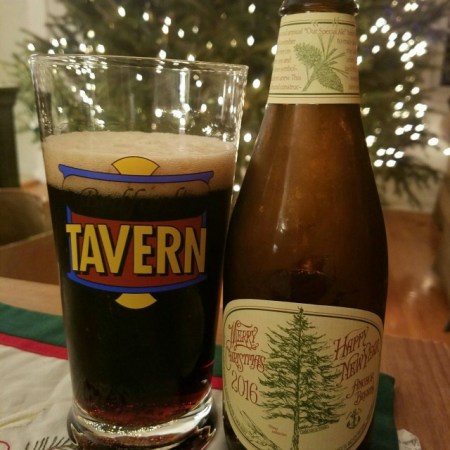
The darker 2016 version of the beer, my favorite from the past few years.
My opinions aside, take a look at the beer landscape, especially this time of year. I mean, aside from the continual glut of various sub-styles of IPA, the many stouts, and leftover pumpkin beers on shelves from mid-November through the remainder of the calendar year. Winter Warmers and Christmas Beers are displayed prominently in bottle shops. Bars and breweries have Christmas/Holiday focused pourings/events. The Winter Warmer and Christmas Beer are slightly different if you ask some people, such as the great beer writer Jeff Alworth who examines the styles over at his must-read Beervana blog. The differences can be negligible and subtle in some cases, in others like Sierra Nevada’s Celebration Ale a highly hopped IPA, the difference can be obvious between “Christmas beer” and Winter Warmer.
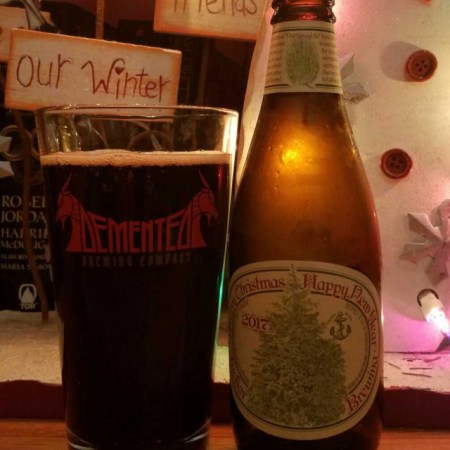
The 2017 vintage. Though poorly lit, the beer poured darker last year, too.
The recipe isn’t the only thing that changes every year. As I noted above, for each new iteration of the beer, a new label is commissioned featuring a different tree, different font, and a slightly different look. The label always looks like an Anchor Christmas beer on the whole, but the specifics do change. On their Web store (steamgear.com), Anchor sells a poster every year which features all the different labels they’ve produced for the beers over the years.
Although Anchor Brewing has been in some form of operation under that name since 1896, it suffered some difficulties from Prohibition until about 1965 when Fritz Maytag III (yes, he’s part of THAT family) purchased a 51% stake in the company and reinvigorated the brand. That re invigoration is what helped to start the craft beer movement in California, specifically. Given their history, and the iconic beers they’ve produced over the years (Porter and Steam, for example), it seems only logical that Anchor brews arguably the most iconic Christmas/Holiday beer and that “Our Special Ale” has achieved, classic iconic beer status. For me, this beer is always a must have during the holidays. It should be a tradition for you, too.
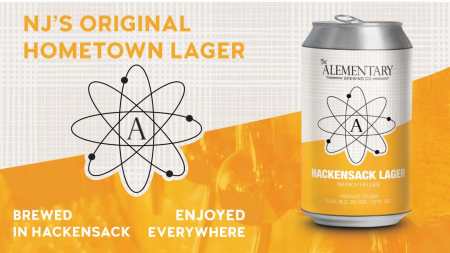
Rooted in pride and thirst, a local lager is never far. Whether you’re in Germany, Belize, or Jersey, there’s sure to be a favorite brew for wherever you’ve found yourself. Our Hackensack Lager, with its crisp golden malty goodness, reflects the diversity of our community and our love for the people who have made this place our home. Thank you, Hackensack!
Lagers are the most popular style of beer in America, specifically the Lagers in the blue, silver, and red beers cans. But there can be nuance and great taste in a lager. As there was a shift away from lagers brewed by smaller, independent breweries in the early years of the American Craft/Independent beer movement, in the recent past, the Lager has been making a comeback (Firestone’s Lager, Founders’ Solid Gold) because when done well, it can be a great style. With Hackensack Lager, the brewers at The Alementary have a flagship Lager for their brewery that is very tasty.
As the German word Helles translates into “bright” this beer is spot on for the style from a visual standpoint. A golden hued beer fills my glass, nearly matching the color of the label on the beer can. The aroma didn’t stand out to me, but that’s fine. I’m not looking for anything out of the ordinary with this beer.
This beer is quite flavorful and the type of beer that comes to mind when people think about beer. There’s a pleasant sweetness to the beer, from first impression to finish. I also enjoyed the roasted bready/biscuit elements from the malt. A sweetness from the malt is also present that balances out the potent Saaz hops that help to define the styles hopping characteristic.
With the approachable flavor profile that doesn’t lean too heavily in a hop or malt direction, the beer is quite refreshing. The relatively low ABV (though a bit higher than many Helles Lagers) makes for a very crushable beer indeed. Hackensack Lager is the epitome of an every day beer; the utility player in your beer fridge that can sit in a glass with any meal. I’ve said this before about similar beers, but it is also true of Hackensack Lager – flavorful enough for folks who are well-versed in the craft beer world and inviting enough for folks who don’t stray away from the macro-produced lagers. The perfect beer to bring to a party if you aren’t sure what other guests will like in their beer.
I’ll comment on the label, too.* All of the Alementary beers have the same atomic logo on the front which is a cool branding icon. Most of their beer labels are white on the top half with a distinct color on the bottom half, in this case the bright gold that would be associated with lager. I dig it, it stands out on its own and is identifiable very easily as a beer from The Alementary.
Clean and crisp, Hackensack Lager is a beer that is simultaneously familiar and innovative in the modern craft beer scene. It’s a “gateway beer” for new craft fans, and it’s also like going back home for experience craft drinkers. It’s truly a beer for everyone, for everything. Making a great lager in a small brewery is no easy feat! We pride ourselves in the consistency and technical skill with which this beer is brewed. Making this beer is all in the details.
Last Chance IPA, 5.9% ABV, is a full-flavored IPA with pleasant citrus flavors of tangerine and grapefruit. Last Chance is a well-balanced, very refreshing beer that we’re sure you’ll enjoy! In addition to the blend of Cascade, Centennial, Citra and Mosaic hops, we’ve also dry-hopped this brew with Citra and Mosaic.
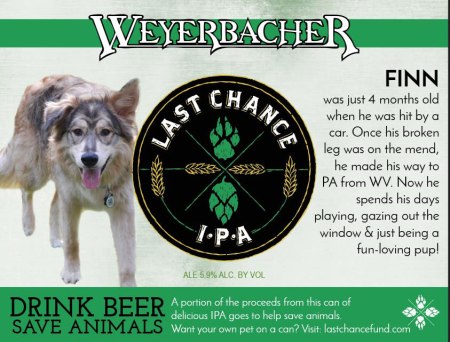
Weyerbacher donates a portion of the proceeds from the sale of every drop of Last Chance IPA to small animal rescue organizations throughout our distribution area. These shelters offer dogs, cats and other pets their last chance to find a new home.
Have a glass and make a difference! Cheers!
Weyerbacher Brewing is one of the great independent Pennsylvania breweries, they’ve been brewing and selling their beer for over twenty years and brew a range of delicious styles. I’ve been wanting to review one of their beers for a while, so when I came across a beer whose proceeds go to animal rescue, the dog lover in me figured this would be a good one to highlight. As such, Weyerbacher donates a portion of the proceeds from this beer to regional (to Easton, PA) animal rescue operations, with over $230K donated since the beer was first made in 2012. Not surprisingly, Weyerbacher has a site dedicated to the fund here: https://lastchancefund.com/
It is usually at this point that I’ll say something along the lines of that’s all well and good, but the beer still needs to be well crafted and appealing. So there. I said…or wrote it. Be that as it may, this beer is a very good IPA.
Weyerbacher describes this one as a West Coast style IPA and I get that from the overall hop profile. There’s a really inviting hop aroma coming off of the beer as soon as I opened the can. The beer poured a rich golden, with slight hints of orange once the glass was completely full. The head is nice and fluffy, too. In other words, this beer looks just about exactly as you’d expect an IPA to look fully poured into a pint glass. So far, I like what my senses are telling me about this beer.
After taking a sip from the glass, I was pleased with how the aroma matched up to the actual taste. Lots of citrus and pine in the hop profile – just what to expect from a West-Coast style IPA. The more of the beer I drank, the more I enjoyed the beer. This isn’t going to blow you away with hop-punches to the face the way some over-the-top IPAs will, but you’ll definitely be aware of their presence.
Although the hop profile is different, and I’d guess different hops were used in Last Chance IPA, what the beer seems to be trying to be is similar to the Brooklyn Defender IPA I highlighted a few weeks ago. Maybe this beer has a little more hop kick. In other words, I’d guess Weyerbacher wanted to make an accessible for most beer drinkers while still working for “seasoned” beer drinkers like myself.
While Weyerbacher seems to specialize in higher ABV beers like big Stouts, Barleywines, or Belgian-style ales, going with an approachable IPA for a beer to raise funds for animal rescue is a smart brewing choice. As I initially said, above all else, the beer has to taste good and Last Chance IPA tastes really good. In fact, my local Wegman’s was doing a Weyerbacher tasting and I liked the small sip/taste of the beer enough that I knew I wanted more.
This barley wine style ale has been aged in a foeder with two classic Canadian ingredients – Ontario maple syrup and cold steeped coffee. The result is an amalgamation of flavours that include molasses, caramelized sugar, toffee, white chocolate and dark fruits that give our barley wine a long finish that is a perfect addition to your favourite breakfast.
It is always fun to try a new style or revisit a beer style you don’t often have. Case in point: one of the “biggest” of all beer styles, the Barleywine. So named because of the typically high alcohol content, often above the 10% range, an ABV typically associated with actual wine. Initially called Barleywine because of that high ABV, the liquid is most definitely a beer since it is fermented from grain and not fruit. Anyway, I’ve only had a few distinct barley wines (and a couple those were vintages of Bigfoot and Bourbon County) over the years and mostly enjoyed them but wanted to delve into the style again.
Finding different barleywines isn’t all that easy, outside of a couple of the larger breweries who distribute to my area (Weyerbacher and Sierra Nevada) brewing well-known varieties. But then I saw this can on the shelf, I knew this would be the one to try, especially given the description above which adorned the can.
After popping open the can and pouring the contents, my glass was filled with an aromatic brownish amber liquid which was very inviting. Of the flavor components called out in the description above, the toffee stands out the most on the nose. A very pleasing smelling beer indeed.
The toffee is there on the first sip, but a welcome wave of coffee accompanies the toffee, too. The subsequent sips and hits of flavor are really pleasing, sweet coffee and more of an after-dinner/dessert feel than breakfast. The beer finishes with a really aggressive hop bite. Considering the IBU on this is 80, that isn’t too surprising. This is a barleywine more aligned with the American style, given the extremely potent hop flavor component.
This is a long-sipper. A flavorful, high-ABV big beer that you should enjoy over the course of an hour or so. Let the beer sit in the glass a bit, let those flavors expand. Hell, this was a 16oz can so if you find one at your local shop (I haven’t seen too many brews from Cameron in my area), it might be worth splitting with a friend.
I liked the beer, would have liked a little more if the hop bite at the end was slightly less potent/aggressive, but that’s not a knock on the style. For the most part, the beer does just what it should for the style. I simply think I’ve come to enjoy the English/less hop forward barleywines, but would absolutely have this one again.
Untapped badges earned with this beer: Wine of Beers (Level 2)
Wine of Beers (Level 2)
Strong, bold flavors really suit you. The barleywine brings with it a long history dating all the way back to ancient Greece. That’s 10 different Barleywine, Wheat Wine Beers or Rye Wine!
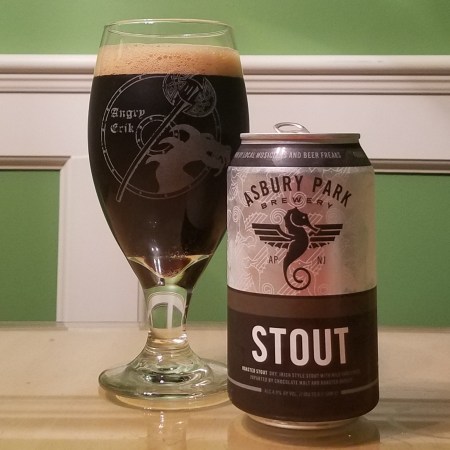
A dry Irish style stout with mild sweetness and notes of coffee and chocolate imparted by roasted malts and flaked oats.
There’s something almost quaint about naming a beer with the simple descriptor of “Roasted Stout” in this day and age of independent/craft brewing. The brewers at Asbury Park Brewing Company may have been thinking along those lines, I would venture to guess. Simple, straightforward, and to the point. That isn’t always a bad thing. Rather, in the case of this beer, that’s a good thing.
Like a stout should, Asbury Park’s Roasted Stout pours a deep black. Not too much of an aroma, so a quick sip tells me much of what I need to know. This tastes like a stout, shockingly. I’d even say this could be the ideal stout to give somebody who wants to know what a stout should taste like.
But why would I say this is an “ideal stout?” Well, first off is that aforementioned color. Second, the balance of roast, sweet, and bitter is quite even. Flavors of roasted malts are expected from a stout. Sometimes that roasty flavor can turn to burnt flavor, but not here with Asbury Park’s Roasted Stout. The sweetness from those malts evokes chocolate, some coffee, maybe even a hint of toffee and just a wonderful flavor that finishes slightly dry. Functionally, at least for me, the flavor profile was effective in that it encouraged me to drink more and more. If anything, the beer exceeded my expectations and was more flavorful than I expected it to be.
This is almost a session stout, given the low ABV which is only a little higher than Guinness Stout. Much as I enjoy Guinness, I found the Roasted Stout from Asbury Park Brewery to be a little more flavorful and maybe a little sweeter. As more and more breweries pop up in the US in general, and in the US specifically, locals will gravitate to those breweries. Having a clean, tasty stout is a must and Asbury Park Brewery have solid, dependable stout in their portfolio. Quite simply, Asbury Park Brewery’s Roasted Stout delivers exactly what you’d want in a roasted stout.
As the badge I earned indicates, I had this beer on Stout Day (which is in its 8th year and usually falls on the first Thursday of November) and this was an absolute perfect beer to have on the day. I’d say that’s as about as good a recommendation as one could get for a stout.
Untapped badges earned with this beer: Stout Day (2018)
Stout Day (2018)
International Stout Day is dedicated to this namesake bold, malty, and historically rich style of beer. First brewed in the late 1600’s, this style has a long history well worth raising a toast to!
DEFEND BEER with Brooklyn Defender IPA, our heroically hopped golden IPA featuring strong notes of tropical fruit, well-muscled hop bitterness, and an incredibly dry finish. Cape not required.
Brooklyn Defender IPA is forged in collaboration with our sidekicks at New York Comic Con as the official beer of the convention.
Brooklyn Brewery is one of the early leaders of the American Craft Beer scene having begun back in 1988. Their flagship beer, Brooklyn Lager is an iconic and very well-made Vienna Lager (think Sam Adams Boston Lager but more flavorful). When New York Comic Con was looking for an “official beer” about seven years ago, they probably thought what better brewery than Brooklyn? One can’t really argue that logic considering the quality of the brewery’s output under legendary Brewmaster Garrett Oliver and the brewery’s iconic status in New York (and the country for that matter).
I’ve been going to New York Comic Con every year for about the last five or six years (2013, 2014, 2015, 2016, 2017, 2018) and in all that time, I’ve never had the beer. Chalk that up to an aversion to IPAs, but since I came round to IPAs over the last year, I knew I had to give this beer a try. Every year, Brooklyn changes up the label, but I don’t know if they change up the recipe. For the 2018 release, they crafted a very tasty beer.
2018 bottle and six pack art for Defender IPA. Courtesy of Brooklyn Brewery’s web site
The label calls this a “Golden IPA” and sure enough, the beer pours a bright gold/yellow. From the look, one could maybe mistake the beer for a Helles Lager. Well, until the aroma of the hops wafts off the glass.
First sip is a nice inviting burst of hops which matches up with what the aroma led me to expect. The hops aren’t overpowering, but they are definitely present. They let you know they are there and the major flavor component of the beer, but those hops aren’t shouting at you with aggressive assertiveness. There’s a dry finish to the beer, too. I found that to be a little unexpected, but not unwelcome.
I think the word I can use that best describes the beer is approachable. IPAs are the most popular style of “craft beer.” On the other hand, the style is what many folks who stick with the macro-produced lagers say keeps them away from craft beer. What Brooklyn has done with this beer is brew an extremely balanced beer that highlights the most prominent aspect of the IPA without it being too overpowering. Given the large attendance at New York Comic Con and the Geek Community in general, it is hard to argue with the formula Brooklyn used to brew this tasty beer.
All told, Defender IPA is a flavorful, approachable beer that works almost like a Session IPA. At 5.5% ABV, a couple of these would go well while you read or reread your favorite run of The Flash, Saga, Watchmen, Wonder Woman, Locke & Key, or Monstress. I think this will be in regular rotation every October for me as a celebration of New York Comic Con.
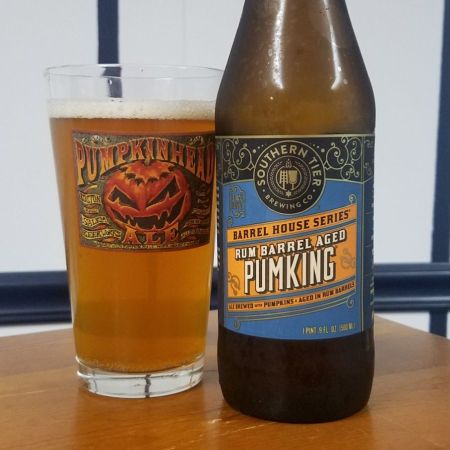
Back in 2014 we had the good fortune of finding a cache of rum barrels which we quickly filled with Pumking making what was affectionately called “Rumking.” We were lucky to have found more barrels, and in 2018, found some of the best we’ve ever used. This batch is at least as delicious as versions past.
Imagine our inimitable Imperial Pumking Ale as the captain on the high seas, flying the Jolly Roger. The ‘King sails for ports unknown in this limited release. Rum Barrel Aged Pumking has been kept like secret treasure in the hollows of the brewery, patiently awaiting discovery. Yo ho ho!
Enjoy Rum Barrel Aged Pumking now, or keep it hidden standing upright in a dark and cool place until you can say ‘anchors aweigh!’
Drinkers who enjoy pumpkin beer, especially those in the Northeast, may have asked themselves when reading my post about pumpkin last week, “What not even one of Southern Tier’s Pumking offerings?” After all Southern Tier is one of the leading brewers of the “dessert beer / pastry stout” style of beers and Pumking has been making the rounds for over 10 years now (2007). Well, I’d wanted to try one of the variants for the past couple of years and decided to go with the biggest one of them all, the Rum Barrel Aged variant (represented by the Pirate Pumking on the far right in the image below).
The Pumking family of icons.
I’ve had the regular version, Pumking seemingly every other year and for a while Warlock was actually my favorite pumpkin beer (until they changed the recipe last year). It is still a good beer (or was last year), but enough about the other members of Pumking’s family. The remainder of this post focuses on Rum Barrel Aged Pumking, which is now part of the “Barrel House Series” at Southern Tier.
The beer pours a perfect golden orange, hinting at the pumpkin and rum flavor. As I brought the glass to my nose, I was punched in the face with the strong, sweet aroma of rum. When I gave another whiff, I was punched again by that sweet rum aroma. Did I mention the beer has a strong aroma of rum? Because there’s a lot of rum on the nose of this beer.
The nose doesn’t lie…my first sip was a big hit of rum, sweetness (maybe a little big of brown sugar?) and some pumpkin spice. Most of the barrel aged beers I’ve had are in the whiskey family – bourbon, rye, or whiskey. I typically don’t gravitate to rum, not that I don’t like it, just not my thing. But here, the rum is a welcoming warmth.
The pumpkin spices come in after the beer sits for a bit, and the full pumpkin character shines or glows. There’s a line of sweetness that the rum enhances in the typical pumpkin spice character, which makes for a really unique take on a pumpkin beer. Or at least for my palette and 50+ pumpkin beers I’ve consumed over the years.
Another thing I found impressive about the beer is that the character of the base beer – Pumking – is still very strong despite the big punch of rum. Pumking has always stood out from other pumpkin beers for me – something about the spice and nuttiness (I’d almost say pecan-like) sets it apart. This really is like Pumking turned up to 11, so if you like Pumking, chances are very good you’ll enjoy this beer.
I feel like the statement I’ve most often made on this blog is to let the beer warm and get closer to room temperature. Well, the statement applies here to the Rum Barrel Aged Pumking. To the point that I’d recommend letting the beer sit for five or ten minutes before fully enjoying it.
At 13.4% ABV, this is either one to share or enjoy over the course of an evening. I took almost the entirety of watching a really good horror movie (The Witch, a little over 90 minutes) to enjoy the beer. Given that letting the beer sit in the glass allows the beer to breathe and the flavors to come alive, you’ll want to take your time with it, too.
I’ve recounted how much I enjoy Southern Tier’s beer in the past, but this is the first “new to me” beer from them I’ve had in almost a year (last year’s new take on Warlock and 3 Citrus Peel Out) but overall, I’ve had nearly 30 beers from the venerable NY brewery and this is a standout from them and worth hunting down.
Fall is in the air and the holidays are just around the corner, but pies and jack-o-lanterns aren’t the only things pumpkins are good for. Pumpkin beers have grown in popularity, bringing with them a delicate balance of malt and spices. That’s 55 different beers with the style of Pumpkin / Yam!
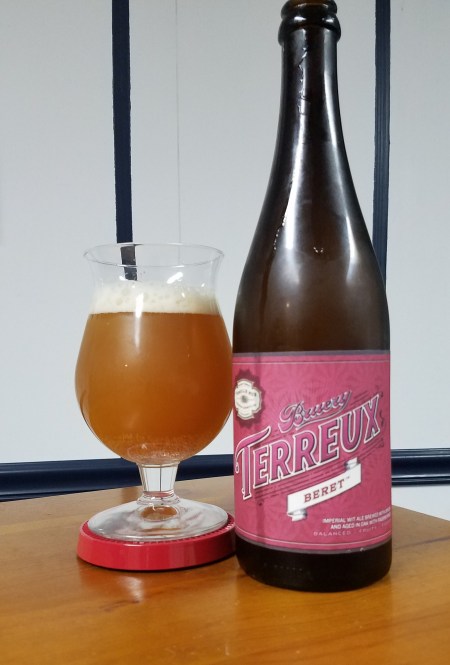
Beret is as artistic as those who wear its namesake cap. Our brewers developed a silky, full-bodied wheat ale which we began fermenting with a Belgian-style witbier yeast strain. To finish the fermentation, we added our collection of barnyard bacteria, intended to slowly sour the ale, bringing out a slight funk and refreshing piquancy. Finally, a small dose of pureed raspberries were added for just a hint of fruity tannins, putting the berry in Beret.
I’ve had a few of the big beers from The Bruery, but before enjoying Beret, I think I only had a taste of Bruery Terreux beer at a beer festival. As their twitter profile inidicates, Bruery Terreux is “The sour & wild side of Famille Rue. Crafting wildly traditional bière alongside The Bruery.” After enjoying Beret, I will be having more of their beers. As I’ve come to enjoy sour beers more and more, I wanted to try one of these big sour beers from California. The range of styles within Sour beers is quite wide and Bruery Terreux seem to brew them all. In the end, I was drawn to Beret were the approachable price of about $15 (some of their 750ml beers range well above $20) and the fruited flavor of raspberry.
The beer pours a cloudy/hazy yellowish-pink. It looks a bit like a fruited hefeweizen/witbier to me, which I suppose makes sense since the beer began as a wheat ale. It has that spongy aroma most Goses do for me. I’m not sure why I use the word spongy, but that imagery pops up in my head. I like Goses so on the whole, and Berliner Weisses as well, so I like where this beer is going on looks and aroma alone.
That first taste is slightly sweet with lots of that spongy sour-tartness. There’s a lot of funkiness, too, the flavor moves around a bit from sweet to tart, but settles down once the raspberry joins in the flavor party. I had this beer on ice to get it cold, which turned out to be too cold. The complexities of the flavor from the chemistry that happens with the ingredients from the wheat to the yeast to the raspberry become more prominent as the beer warmed up.
For my palette’s sensibilities, I would have enjoyed the beer a little bit more if the raspberry was a more assertive and pronounced. A little more sweetness would have been welcome. I wonder how the same beer would taste with a slightly sweeter fruit like peach.
On the whole, Beret is a fairly approachable sour ale – it would be a good beer for people unsure of whether they enjoy sours to try. That, coupled with the lower price point compared to many offerings from The Breury or Bruery Terreaux, makes Beret one to potentially share with a friend who is curious about sour beers.
Right about now you’re feeling your face tighten and your taste buds explode. The full pucker is quickly setting in and you can’t get enough. This is the wonder of the sour. That’s 55 different Sour Beers.
Hopped Down (Level 67)
One cannot live on dank hops alone. Tone down the bitterness and enjoy some smooth flavor. That’s 335 different beers with an IBU of 20 or below.













 The Tap Takeover