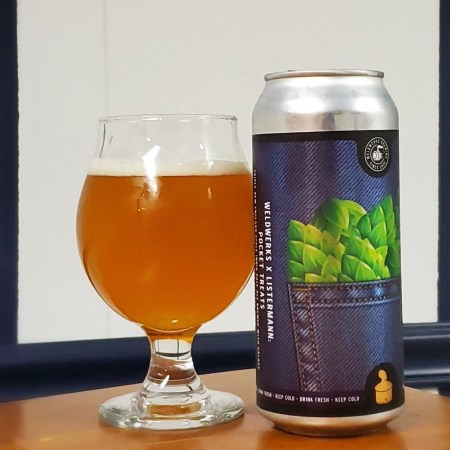
Triple NE IPA brewed with Galaxy, El Dorado, Citra, & Sultana hops.
As I was reviewing my electronic archive of beer reviews, I realized the last IPA I reviewed was way back in May of this year (2020). When I was given this Triple IPA by my father and I tasted how delicious it was, I knew I’d want to review it. What sets a Triple IPA apart from it’s lower-tiered siblings? Most Triple IPAs are upwards of 9.5% ABV, are brewed with insane amounts of hops, more malt than standard IPAs, and a more pronounced hop resin feel to the beer.
I’ve known about WeldWerks for quite a while, Listermann was relatively new to me before this beer. What I know of WeldWerks is from a friend in Colorado who swears by their IPAs, so I thought this beer might be good.
I was NOT prepared for this beer, which is a compliment. Granted, this was only the fifth Triple IPA I’ve drank since joining untapped in 2014 so maybe I wasn’t prepared (and two other Triple IPAs were from the same brewery).
Out of the can, the beer is yellow-orange, with a pleasant cloudiness to the look. It pours fairly thick, as one might expect from a high ABV stout (yes, stout). Aroma is very hoppy with hints of tropical fruit, which is the standard aroma of a Triple IPA of the New England variety.
I am very pleased with that first sip, copious hops define everything about this beer. The overall flavor is of juicy, tropical hops, maybe orange and pineapple, along with some kind of melon maybe? While I can’t pinpoint the specific fruits that give the tropical flavor of the hops, I can say it is delicious. Galaxy is a great hop that can evoke some peachy elements and that could be part of the overall flavor profile and is a hop I seek out when I’m in the mood for an IPA. Sultana and El Dorado bring additional tropical and stone fruit flavors that help to give the beer a nice big, pleasant hop punch.
The feel of the beer is a little chewy, syrupy, and resinous, which is what I’ve come to expect from these kinds of uber-hopped beers. In some ways, I’m reminded of Dogfish Head’s 120 Minute in all the best ways. Overall, the one word I’d use to describe this beer is Dank.
Given this is a beer with a very high ABV (10%) and large hop flavor, the beer bursts with even more pronounced flavors as it warms.
Pocket Treats is an outstanding hop-forward beer from two great breweries and although seemingly canned in limited quantities, is a beer worth seeking out.
Packed with a powerful punch of high alcohol hoppiness, Triple IPAs will definitely hit you hard. Often featuring a sweet flavor profile, these boozy brews can sneak up on you.
Draught Diversions is the catchall label for mini-rants, think-pieces, and posts that don’t just focus on one beer here at The Tap Takeover. We hope you don’t grow too weary of the alcohol alliterative names we use…
Four City Brewing in Orange, NJ has been generating some positive buzz since opening their doors for business about a year ago (2019). Their average beer rating on untappd is about 3.75 / 5, with many beers landing above a 4-bottle cap rating and a few friends rating their beers quite higher than that. Four City Brewing is one of three black-owned breweries in New Jersey (the other two are Montclair Brewing Company and Hackensack Brewing Company), too.
Four City Badge from Untappd
Four City is in a pretty good location, close to the downtown area of Orange and across the street from the Orange NJ Transit train station. Orange also has a history of brewing; Rheingold Beer, once one of the most popular beers in the NY/NJ area, brewed beer in Orange, but shut its doors in 1980. The beautiful building, once a warehouse and coal facility, is now a mixed use space developed by L+M Partners with the brewery just one element in the revitalization of the Downtown Orange. The space is very simply, a beautiful brewery. A very inviting exterior, a welcoming interior, as well as the friendly staff, help to make this brewery look so good.
Before the brewery opened, a lot of passion, work, and effort went into its creation. Like the origin story for many breweries, owners Roger Apollon Jr., Jeff Gattens, and Anthony Minervino were homebrewers who unofficially (or really, I suppose officially) called themselves “The Brew Council.” For about fifteen years, Roger sought out different beers wherever he went, before meeting Anthony and Jeff. As the brewery ramped up, they hired a full time head brewer, Joe Vitale. That was all about a year ago. They all settled on Orange as the location because they are all from the area and in addition to Rheingold once calling Orange home, way back in 1901, the Winter Brothers’ Orange Brewery was in the Township. The name, “Four City” honors the four Oranges of NJ (West, East, South, and Orange). As will become evident, many of the beer names are homages/tributes to the local diversity and history of the area. The design of the brewery, the design of the logo, and most of the can labels are very consistent. In other words, Four City has established a very strong brand identity.
The taproom is fairly large at 4,700 square feet and the tanks are visible, but I don’t recall what brewery’s barrel capacity is. What Jeff Gattens told me during our conversation was that Four City has a canning line and they have enough capacity to allow them to brew and can beer for their friends at Hoboken Brewing. The day of my visit, 11 beers were available in cans and 21 beers available on draught. There is some overlap there, for example, their flagship Pale Ale Citrus City was available in both Cans and on draught. In other words, Four City has a great set up to be a production facility that also can house patrons on site.
Four City’s Beer Menu, November 7, 2020
The day was unseasonably warm for November (I was wearing shorts). When we arrived, we were seated at a table inside, with all the tables amply spaced out for social distancing. The door was open and the coolish breeze was blowing through the brewery. The extremely friendly beertender greeted us and took our orders. While Four City wasn’t doing flights, they were pouring “medium” pours, which I think were about 8oz.
“Medium” Pour of Citrus City Pale Ale
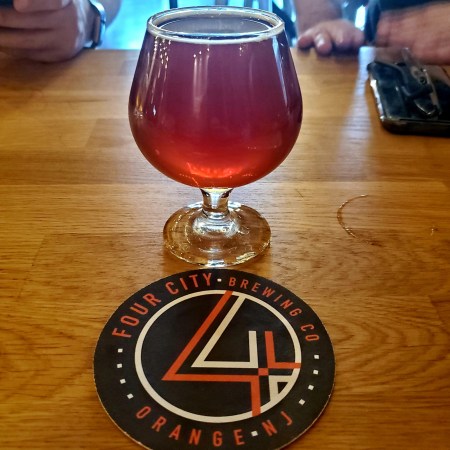
I went with the flagship, Citrus City, the Belgian Dubbel, St. Cloud (reviewed Tuesday, 11/17) and Quad City, the Quadrupel. It isn’t often I see both a Dubbel and a Quadrupel (one of my favorite styles) on draught, so I felt very compelled to get Four City’s interpretation of these two styles that tend not to be uber-prevalent. I was very impressed with Citrus City, to the point I regret not bringing home a four pack of the beer especially since it has three of my favorite hops: Citra, Simcoe, and Centennial hops. It was everything I hope to enjoy a Pale Ale…hints of citrus, with hops and malt expertly balanced. The beer was very clean and would be a great beer for the cooler. I reviewed St. Cloud, so that leaves Quad City to discuss, albeit briefly. Wow. Simply, wow. There is so much flavor to this beer, hints of dates and figs from the potent yeast, a very sweet beer whose 10.2% ABV is dangerously masked. This is a fantastic Quadrupel.
“Medium” Pour of the delicious Quad City Quadrupel
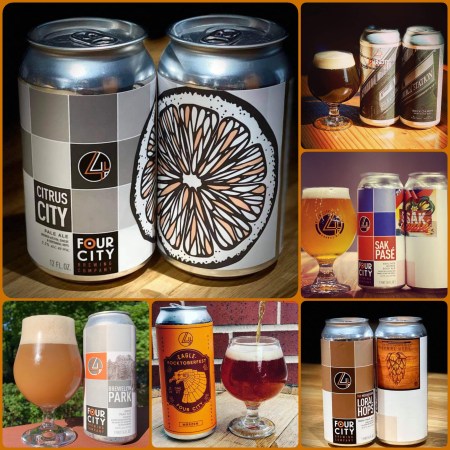
As I noted above, many of the beers pay tribute to the history/diversity of the region. Citrus City is a fairly obvious homage to the nickname of the brewery’s home town. A series of IPAs, Hedison’s Phonograph are named in honor of West Orange’s Thomas Edison, inventor of the phonograph. The Miseducation of Loral Hops pays tribute to megastar Lauryn Hill of South Orange, NJ, Sak Pasé (a fruited Berliner Weisse) is a Haitian Creole greeting for “What’s Up?” and there’s a sizeable Haitian contingent in the Oranges; Brewellyn Park is an IPA named for West Orange’s Llewellyn Park; Eagle Rocktoberfest (a Märzen) takes its name from the Eagle Rock landmark; Brick Church is a dark wheat ale takes its name from the eponymous landmark minutes from the brewery, and 55 Sour Essex Ave is a Berliner Weisse named for the brewery’s address, and so on.
Four City Can Collage, images courtesy of Four City’s Facebook
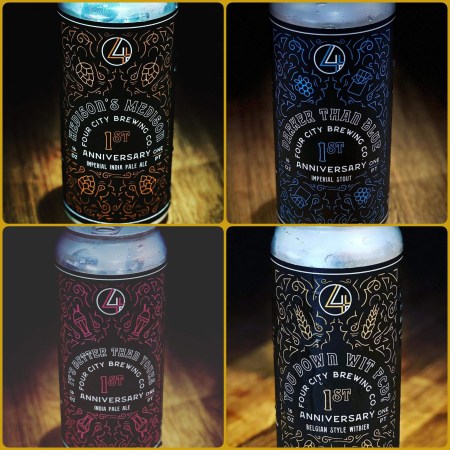
Talking about the pandemic is unavoidable at this point, but Four City was in a decent position to pivot. The aforementioned canning line in the facility allowed them to package their beer for the home delivery now being allowed in the State of New Jersey. Also during the pandemic, Four City celebrated their 1st anniversary with four different beers: Hedison’s Medison with three different hops rather than the standard single hop; Darker than Blue, a pastry stout with cacao nibs, maple syrup, and raspberries; You Down Wit FCB, a witbier (the name is an homage to 90s rapgroup Naughty by Nature’s song “O.P.P.” and if you are humming that song as you read this then I suspect we’re about the same age); and It’s Better Than Yours, a Milkshake IPA who takes its name from the lyrics of the song “Milkshake.”
Four City Anniversary Beers, courtesy of Four City’s Facebook
Although Four City is just over a year old, they’ve already garnered some national recognition. Being a Black-owned brewery is one way they’ve stood out, not just in New Jersey, but nationally. There’s been a beer festival in Pittsburgh the last few years called Fresh Fest, which features Black-owned breweries. In 2020, Four City collaborated with Shu Brew of Zelienople, PA on a Dark Ale with Oreos, cacao, vanilla, coffee, and lactose they’ve called Brewers Gonna Work it Out. That sounds like a beer I want yesterday. Some of their beer has become available on Tavour, as well.
Four City/ShuBru Brewers Gonna Work it Out courtesy of hopculturemag via Four City’s Facebook
Prior to the Pandemic, Four City hosted onsite events, including Halloween parties, a night for a meet and greet with local artists, a Holiday Beerzar, a “Brews and Culture” night of local music, a cornhole tournament, and the requisite yoga nights. These events, along with the owners’ deep roots in the region, deep respect they have for the community, and honor they show with their beer names adds up to one thing in my mind. Just over one year into their existence, Four City Brewing is something of a template, or ideal of what a community Craft Brewery should be.
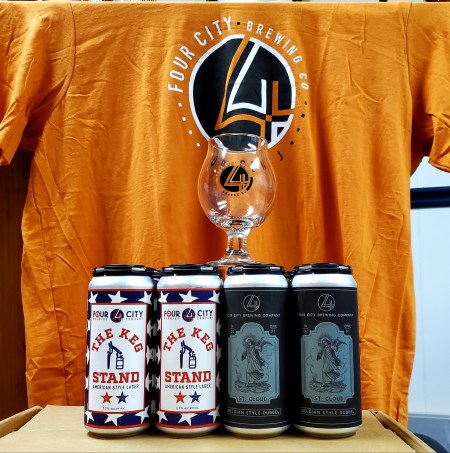
The goodies I brought home from my visit to Four City
Since Four City was part of a tour of a few breweries fairly close together (a tradition for my birthday over the last few years), there are obviously a handful in the area that could comprise a similar tour. Montclair Brewery is the closest at 4 miles away, and we tried to visit, but they were extremely packed and because of the social distancing rules of the Pandemic, we couldn’t stick around because we had reservations at other places during the day. Also very close is the Gaslight Brewpub, which is where we went after Four City for dinner, they’ve got really good food. Melovino Meadery is about 5 miles away, Ghost Hawk Brewing, Magnify Brewing, and Cricket Hill Brewing (the latter two of I’ve visited) are relatively close at about 11 miles away.
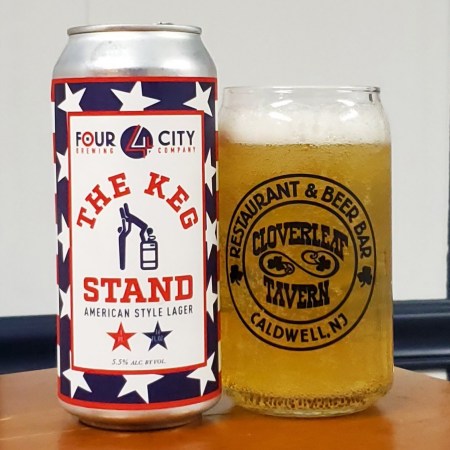
The Kegstand, a delicious American Lager
I’ve written quite a bit about Four City Brewing at this point. One thing should be very clear – I like the brewery a lot. Between supporting local independent businesses, supporting black-owned breweries, and supporting breweries that make super beer, Four City is a must visit for those reasons. Four City Brewing is comfortably near the top of the 50 or so “new to me” breweries I’ve visited over the last few years and I look forward to visiting again.
Some other links of interest and sources of information for this post:
Our Belgian ale made with pilsner, pale and Munich malt with a generous amount of dark Belgian candi syrup
I’d been seeing good things about Four City Brewing over the last year or so of their existence, mainly from friends on untappd who have had a few of their beers. As such, I was very pleased to visit during my annual birthday beer tour. What I found even more pleasantly surprising was a Belgian Dubbel on draught (and available in cans). I like the style, but to say it isn’t in the upper tier of popular craft styles is an understatement, so when I see one available, I’m going to try it.
In the Belgian Tulip glass, the beer looks exactly the part, slightly brown and rusty with a creamy head. Aroma is strongly of the Belgian yeast. From a visual perspective, as well as an aromatic perspective, this Belgian Dubbel is true to style.
But what about the taste?
St. Cloud passes what I am now dubbing my “first sip test.” I get a lot of flavors and the texture/mouthfeel I associate with Belgian Dubbels; I’m impressed. The yeast is almost always the driving flavor factor in Belgian Dubbels (and most Belgian inspired styles for that matter) and that seems to be the case with St. Cloud. I get a very rich evocation of flavors, some stone fruit elements and maybe banana hints as well, which many yeast strains evoke. When I had the beer at the brewery, it was a potent blend of flavors and a beer to sip. Out of the can, the same elements help to lend a more measured approach to consuming. There’s a lot of flavor and enjoying the beer slowly allows one to appreciate the full profile of the beer.
Four City St. Cloud, an impressively delicious Belgian Dubbel
Perhaps what rings true strongest between Four City’s St. Cloud and the world class Dubbels I’ve had (Ommegang’s Abbey Ale and the Dubbel from Westmalle) is the mouthfeel (again, I hate that word). The carbonation and yeast give the beer a hefty weight, a chewiness that proves St. Cloud as a significant and rich beer. Fortunately, St. Cloud also hits the flavor notes of the style quite successfully, too.
I expected to have some good beers from Four City, but those expectations were for quality in their American styles (big stouts, hop-forward beers) like their American Pale Ale Citrus City which is a great beer. What I didn’t expect upon arrival at Four City was being so impressed with the nuance required for the classic Belgian styles like a Dubbel, which some say is a tough style to brew with high quality. Well, Four City Brewing has shown their true measure of quality with this beer.
Later in the week (Thursday), expect to see a full spotlight on Four City Brewing.
Our heavily fruited, lightly salted, Gose returns! Fruitastic Voyage is brewed with Lactose and a touch of Fleur de Sel before being conditioned on double the amount of fruit as our Acid Blend series. For this newest batch, we conditioned this beer on an absurd amount of Mango Purée+Orange Purée+Peach Purée for a refreshing, over-the-top, fruit forward drinking experience. Come along and ride on a fruitastic voyage! // Lightly tart with notes of soft fleshy peaches, ripe mango, yellow Starbursts, and balancing salt.
Brix City in Little Ferry, NJ has gained a reputation over their last five years of being in business for brewing flavorful, fruited sour ales and Hazy IPAs. When I visited the brewery (on my Birthday in November) it was sunny and unseasonably warm in the 70s or 80s. When I saw this Gose on draft, I was very happy because the style is a great warm weather beer for enjoying outside with friends, which just so happened to describe the day exactly.
When the beer arrived, I wouldn’t have immediately pegged the beer as a Gose, it looked like an extremely hazy IPA or an unfiltered beer. When I passed the beer in front of my nose, I smelled some funk and fruit aromas from the beer, which disabused my initial notion that this is an IPA.
Image courtesy of Brix City’s facebook
The first sip tells me I made the correct decision to start the day with this beer. Huge fruit flavors assert themselves off the bat. Mango is one of my favorite fruits and Mango, in my taste buds, seems to be the most dominant of the three fruits. The peach is also prominent as well, but the two stone fruits complement each other very nicely any time they are paired together. The orange is subtle, but the acidic nature of that fruit, I think, brings a good balance to the sweet mango and peach.
In the description above, Fleur de Sel is called out as a brewing component, which sounds very fancy. I only just discovered that Fleur de Sel is salt and while I don’t get the level of salinity in this beer that I’ve tasted in other Gose/Gose-style ales, I think the salt is another additional balance on the fruit. Which makes Fruitastic Voyage almost a reverse Gose since salinity in the traditional Gose as brewed in Leipzig Germany is a natural component of the region’s water. Here the salt is added and I’m going to guess it was added so that the extremely copious levels of fruit in the beer are balanced and not cloying..
However the folks at Brix City achieved the end product that is this beer, it was successful. This version of Fruitastic Voyage with Mango, Orange, and Peach, is a knockout of a beer. I’d call it a Gose turned up to eleven and since this is a series of beers, I’ll definitely be seeking out the other fruited variants of this beer. The only other thing I’ll note about this beer is the ABV at 6.5% is a little higher than most Gose I’ve had which have largely been below 5% ABV. Not a negative point against the beer, just worth noting that it follows the theme of Brix hewing to their own path while also brewing an old world style.
I’ve only had 5 total beers from Brix over the years so based on this beer (and the Get Puft IPA I had during my visit), I really need to seek out their beers more often. Fortunately, their beers are often in the refrigerator at the liquor stores near me.
First brewed in the early 16th century, this peculiar flavored beer has made quite the come back. With a tart, salty combination, your taste buds are probably still tingling… and excited for more!
Draught Diversions is the catchall label for mini-rants, think-pieces, and non-review posts here at The Tap Takeover. We hope you don’t grow too weary of the alcohol alliterative names we use…
Shorter days, darker nights, and cooler temperatures arrive in October. Bigger beers begin to dominate the shelves in October although seasonal creep for Christmas Beers is also the norm now as favorites like Tröegs Mad Elf began appearing in the middle of the month. October 2020’s six pack includes beers from long time favorites, one new brewery, and a brewery I should be seeking out more often. A variety of styles this October; a couple of IPAs, a couple of dark beers, and a barleywine. Let’s dive in, shall we?
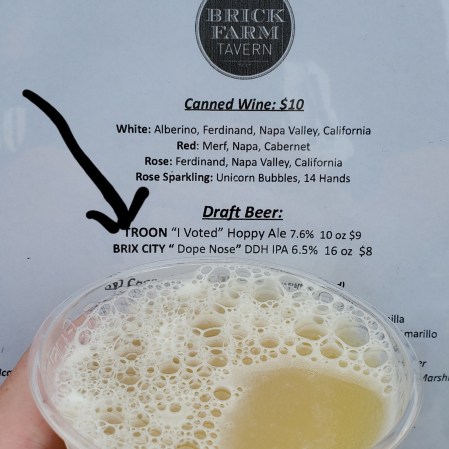
Troon brews some of the most sought-after beers in the State of New Jersey, with a reputation for big stouts, kettle sours, and hazy hoppy ales. (They rarely call their beers “IPA”) So when I took my wife on a wonderful socially-distanced tour of Sourland Mountain Spirits (on the same large farm complex), I had a pour of this beer at the Brick Farm Tavern (also on the big farm complex). This beer is a delicious, hazy IPA with a magnificent blend of hops. Now that I know how close Brick Farm Tavern is (which is a person’s best shot at getting a Troon beer), I’ll have to stop there in the future.
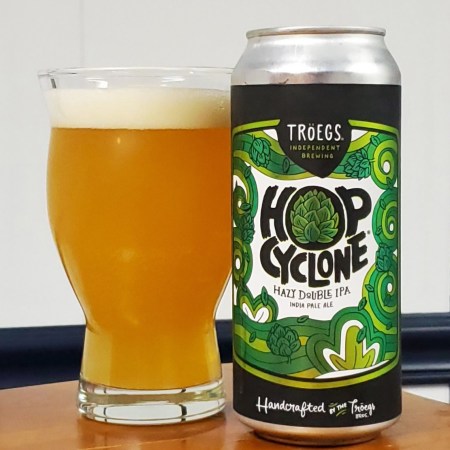
It has been far too long since I had a new beer from Tröegs and I haven’t had a new IPA in my fridge for a while. HopCyclone ticked off both of those boxes and is an outstanding New England style IPA. There’s a blend of four hops in this beer, Citra, Sabro, Sultana, and Simcoe, which are a great combination. I like Simcoe quite a bit and that seems to shine through really nicely, overall the beer has pleasant hints of citrus, peach, and pineapple. Plain and simple, HopCyclone is a great beer.
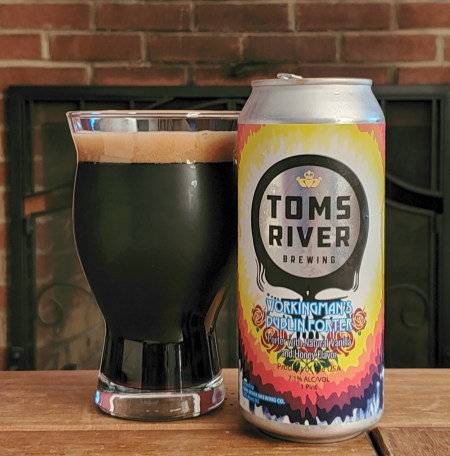
Tom’s River Brewing keeps impressing me. This is an Irish-inspired Dublin porter, which isn’t a surprise considering the brewery’s roots. Madagascar Vanilla beans and local honey add another layer of flavor to the beer. What those adjuncts do in this beer is soften the bitterness of the coffee, for an overall tasty beer.
Sully photobombing this shot. Pilsners, especially great ones, are perfect for sitting on the porch relaxing while your dog keeps watch over the yard.
Carton has been brewing and canning a series of Pilsners over the past few months, this one they are calling an “American Pilsner.” I call it a delicious Lager/Pilsner. There’s a very clean flavor profile with the core four elements of beer working in harmony. This maybe the lightest yellow pilsner I can remember having, but damn if it isn’t a fine beer.
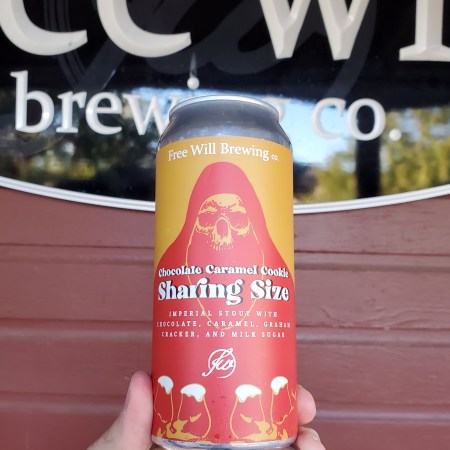
Free Will Brewing has a taproom in Peddler’s Village in Lahaska, PA and during the month of October, there was a socially distanced haunted walking ghost tour called Murder Mystery: Homicide and Hauntings from Without a Cue, which was a blast. Of course I grabbed a beer from Free Will, this is their Hallowe’en beer, four different stouts inspired by popular Hallowe’en candy. This one is inspired by the famous “right cookie” and “left cookie” brand and was an outstandingly balanced sweet stout, brewed in collaboration with Breweries in PA. Cool label art, too
Firestone Walker calls this a “Blonde Barleywine,” I call it an outstanding barrel-aged big beer. Firestone Walker has such skill with barrel aging so when I noticed a local shop had a 3-year old barrel aged barleywine from these masters of blending and barrel aging, there was no way I was NOT getting myself a bottle, especially at a $9 price tag. This is one of the best barleywines I’ve ever had. The beer has a strong bourbon aroma and the flavors that emerge include vanilla, chewy hops, toffee, and caramel. Simply an outstanding beer.
Another solid month overall for new beers, I could have easily highlighted 8 to 10 beers this month. Only one real drainpour, a Salted Caramel Pumpkin Ale, which was disgustingly oversweet.
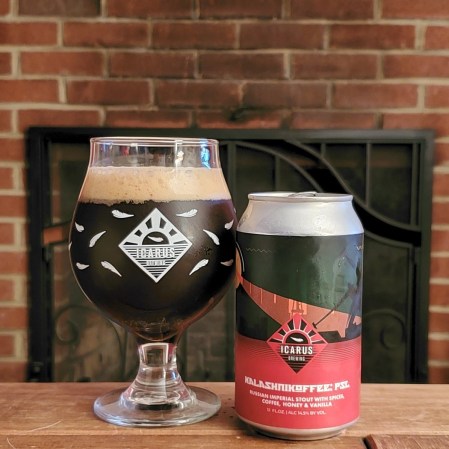
Russian Imperial Stout brewed with Wildflower Honey, Brown Sugar, Cinamon and Nutmeg. Conditioned on a blend of Fresh Coffee and Vanilla Beans.
This is not the pumpkin beer you’re looking for…. Icarus Brewing (who I’ve made no bones about being one of my favorite, maybe my top favorite, NJ brewery) is able to produce a delicious variety of beers from few base recipes for a couple of series. One of those “multitasker” (to borrow an Alton Brown phrase) recipes or series is Kalishnikov, their Russian Imperial Stout, which has seen quite a few variants, some of which I’ve had, including a delicious barrel aged version.
This version looks to emulate that ever present fall drink, the pumpkin spice latte (i.e. the “PSL” of the beer name). While there are no pumpkins in this beer, the spices associated with Pumpkin Pie – cinnamon, nutmeg, brown sugar, along with the beer having been conditioned on Coffee and Vanilla Beans – help this the beer evoke autumn, at least in name. The standard Kalishknov is brewed with honey…so yeah, a decent amount of additional flavor components in the beer.
Pouring the beer into the glass, it mostly looks the part of a big burly, Russian Imperial Stout. It isn’t pitch black, exactly, but rather a black that was mixed with a very deep brown. The aroma gives off hints of the malt and spices, so nothing out of the unexpected.
The first sip is of autumn. As I said, I’ve had and enjoyed a few different variants of this beer, in addition to a couple barrel-aged versions of Icarus’s Russian Imperial Stouts and this beer seems to match up to those expectations nicely. As I have more of the beer and it warms up, those autumnally associated spices begin to awaken, with the nutmeg asserting itself a tad more strongly than the cinnamon.
In past versions of this beer, the wildflower honey balances out the bitterness inherently associated with Russian Imperial Stout, from a style perspective. The autumnal spices mask the honey and accentuate the bitterness of the coffee adjunct, and combined with the vanilla, give the beer a very earthy overall flavors for me.
Although there is no Pumpkin in this beer, the additional spices normally associated with the gourd are and that’s where the additional flavor elements of this beer shine. Hell, pumpkin itself isn’t a all that flavorful, but it holds the spices quite nicely, as does this beer. The ever-present honey in the “Kalishnikoff” line of stouts from Icarus helps to enhance the overall potency of the spices.
Playing with a proven fan favorite beer in their Kalishnikoff Russian Imperial Stout and mixing it up with the autumnal spices of the ubiquitous coffee beverage, Icarus has yet another winning beer in their portfolio.
Don’t be afraid of things that go hop in the night! Rich roasted malt flavors haunt the shadows of our Imperial Red Ale’s bitter teeth.
FLAVOR Ruby red in color with a toasty malt body lurking beneath a stunning hop bite.
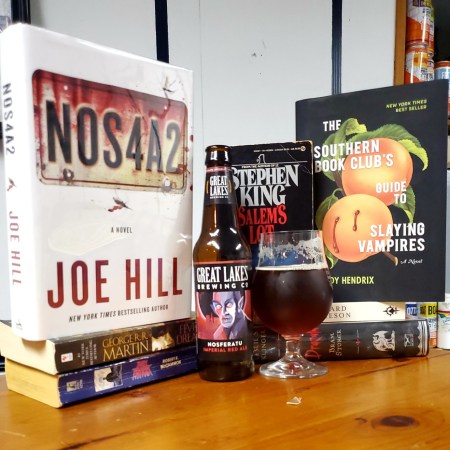
Great Lakes Brewing is one of the most respected independent American brewing companies of the last few decades. One of their seasonal favorites (along with their outstanding Oktoberfest and Christmas Ale) is Nosferatu, a hoppy, malty Imperial Red Ale, the beer spotlighted today.
I’ve had quite a few beers from Great Lakes, I’ve enjoyed most of them to a fairly significant degree but Red Ales haven’t been much of a go to for me. A few things led me to finally grabbing a four pack of this beer:
Hallowe’en is approaching, one of my favorite holidays/times of the year
I’m long-time fan of horror fiction, and the Vampire/Nosferatu is one of the most iconic horror images
Seeing this beer favorably compared to an all-time favorite in Tröeg’s Nugget Nectar
In other words, this beer brings together my love of great beer and dark tales.
The pop of the bottle cap is a nice sound I don’t hear too often any more, most of the beers I’ve been drinking have been out of cans. As for the beer that pours into my glass – yep, that’s a red ale. A deep red that is somewhere between amber and crimson, in my eyes. There’s a nice foamy head initially, too. Aroma is a little bit of hoppiness, but to be honest, nothing else too noteworthy. It smells like a beer.
There’s a very prominent hop presence in that first sip. Given the relatively high IBU level of 70, that’s not a surprise. It is not off-putting the way some overly hopped beers are because Great Lakes brewed this beer with a significant level of malts, three kinds, that provide a caramel sweetness to balance the hops. Going by the fact sheet on Great Lakes Brewing’s Web site, the hops used here are Simcoe and Cascade, both extremely popular hops and hops that helped to drive the hop-forward beer movement of the 90s and early 2000s. Simcoe has emerged, for me, as a favorite in recent years so it was especially nice to see its pronounced flavor complemented by the great Cascade hop in Nosferatu. I had a second bottle about a week after the first bottle and the Simcoe hops help to make this beer work so well for me.
Insert standard suggestion for higher ABV beer to let the beer open up to room temperature a little for greater enjoyment.
The name of the beer and label are immediately recognizable, the silent film Nosferatu is a film that has left an indelible mark on horror genre and the vampire mythos. The beer is a worthy homage to that image and character – Nosferatu the beer is a wonderful, complementary marriage of hops and malt that gives a flavor worth savoring.
Nestled in with some classic Vampire novels, NOS4A2 by Joe Hill, Fevre Dream by George R.R. Martin, They Thirst by Robert R. McCammon, ‘Salem’s Lot by Stephen King, Dracula (Annotated) by Brahm Stoker, I Am Legend by iIchard Matheson, The Southern Vampire’s Guide to Slaying Vampires by Grady Hendrix. Review links to a few at the end of the post
A beer like Nosferatu is a bold reminder that some beers with a little bit of history behind them are worth enjoying now and in the future. It is also a beer that helps to showcase the great diversity in the portfolio of Great Lakes Brewing Company. Given the name of the beer, the eye-catching imagery of the label, and most importantly, the bold, delicious flavor, I can understand why Nosferatu has been an annual favorite from Great Lakes Brewing Company. I know it will be in my refrigerator for Halloweens to come.
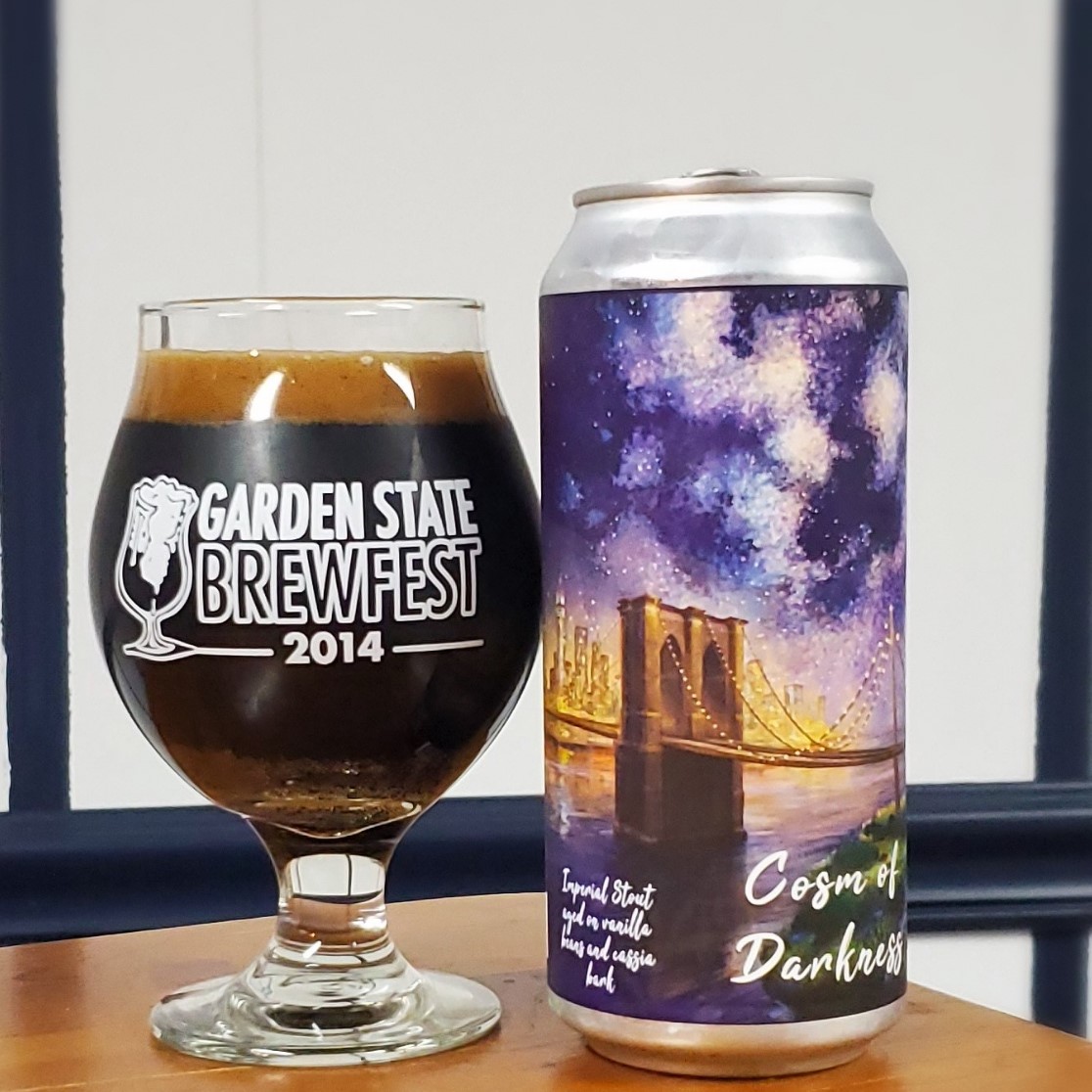
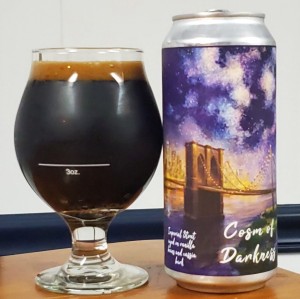
Name: Cosm of Darkness Brewing Company: Timber Ales in collaboration with The Eight State Brewing Company Location: New York, NY / Greenville, SC Style: Stout – Imperial / Double ABV: 12%
“An outstanding Imperial Stout crafted with multiple adjuncts that is a bounty of flavor.”
Cosm of Darkness is an Imperial Stout brewed in collaboration with our friends from The Eighth State Brewing Company. This beer has been aged on Ugandan vanilla beans and cassia bark before being canned for your enjoyment.
Few beers are as welcome on a cool evening as a big, bold stout. Timber Ales is a relatively new brewing company, a contract brewer at that, but they have burst out of the gates with big stouts/barrel-aged stouts and barleywines/barrel-aged barleywines, as well as the requisite IPAs. One of my local shops had a single of this beer for sale and based on hearing Jason Stein on Al Gattullo’s Craft Beer Podcast, I had to give a beer from Timber Ales a try.
Pouring the beer into the glass, all I see is darkness and I like it. As the head forms, there’s a hint brownish red, which is a slightly different tone than a typical stout. Aroma from the beer hints at the vanilla the can indicates is in the beer. This looks to be, and has the aroma of, everything I want in a big Imperial Stout.
There’s something else to the beer at the outset lending additional layers to the look and aroma. I assume it is the cassia bark. Before having this beer, I never heard of cassia bark. A quick google search educated me – it is essentially a form of cinnamon. In theory, cinnamon and vanilla pair very nicely together. In practice, in the form of this beer…oh hell yeah.
First sip is of roasted malts with hints of vanilla with the cassia bark shining through. Those three elements are the basis of the flavor of the beer and they all play together perfectly, with the cassia bark perhaps being the star of the trio. It is definitely cinnamon, but unlike cinnamon I’ve had in the past. Especially cinnamon in beer.
Like all big beers (and this is a gigantic beer at 12%), the flavors emerge to a greater, and more delicious degree, as the beer settles from the cold of the fridge to room temperature. Again, as the beer warms, the cassia bark is what is most prominent to me as a lovely compliment to the roasted malts and vanilla.
Jason, I believe, began as a homebrewer and has since partnered with Twelve Percent Beer Project in Connecticut where all of Timber Ales are brewed. Seems like a great partnership, at least based on this beer.
Cosm of Darkness is an outstanding Imperial Stout that is a great beer to enjoy over the course of an hour or so. Based on this beer, I’ll be seeking out more beer from Timber Ales.
We all love Stouts, and now we have a dedicated badge to celebrate your dedication to these dark, top-fermented beer in multiple variations, like Oatmeal, Milk and more! Which one will you start with? That’s 325 different beers with the style of Stout. Try 5 more for Level 66!
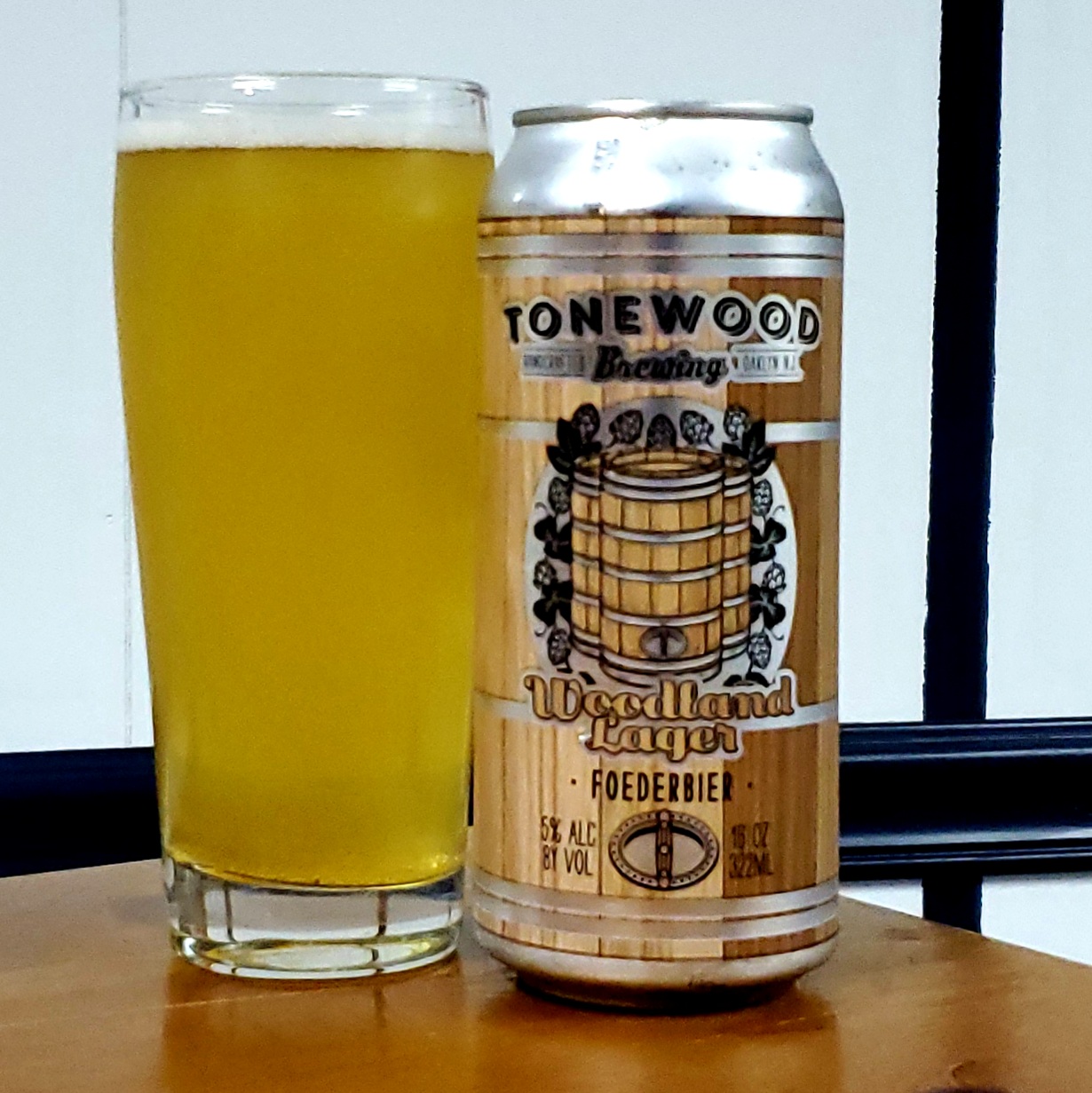
A traditionally brewed lager aged in an all American Oak foeder. This beer has notes of oak, soft vanilla, and pillowy marshmallow, finished out with crisp notes of fresh baked biscuit and floral lilac.
Tonewood is a brewery that has been impressing me with each new beer I’ve had and the latest to do so is this beer, Woodland Lager. I follow Tonewood on Instagram and when this beer popped up as a pending release, I was very intrigued by the description of the beer and was hoping this Woodland Lager would make it into their distribution footprint. It did, thus this review. 😊
I’ve had several higher alcohol beers aged in some form of wood (stouts, porters, dopplebocks) and wild/sour ales aged in wood, but very few low ABV lagers aged in wood, so I wasn’t sure what to expect. How much would the wood/oak foeder change or modify the taste of the lager?
When the beer fills up the glass, it looks more like a witbier than a lager to my eyes. The color and even the head give me that impression. I’m already a little perplexed, but that isn’t necessarily a bad thing. The aroma is more lager than the appearance would lead me to believe; however.
There’s a subtle sweetness that is noticeable on first sip. But this is definitely a lager with the malt elements lending hints of soft bread or crackers. Something else is underlying the traditional lager flavors, which likely comes from the beer having been aged in that Oak foeder. That “something else” is very pleasant and complements the classic lager flavor nicely.
What are those flavors? Well, there’s some hints of vanilla, undoubtedly which likely comes from the oak. I mentioned the malt elements lending soft bread, but more specifically, this beer is like vanilla sweet bread, w/slightly burnt edges, baked in an oak pan. It is utterly sublime, not like many other beers, specifically not like any lagers I can recall drinking.
The ultimate proof of how much I enjoyed the beer is this: I barely finished the first 16oz can before I cracked open the second can. Woodland Lager is one of the more fascinating lagers I’ve ever had. This beer is a great example of the interesting kinds of beers Tonewood seems to be crafting on a regular basis.
Draught Diversions is the catchall label for mini-rants, think-pieces, and non-review posts here at The Tap Takeover. We hope you don’t grow too weary of the alcohol alliterative names we use…
September brings the hints of cooler weather and the season of darker beers. September is also when Oktoberfest traditionally begins. Despite the celebration not happening, the Märzen and Festbiers have still been on the shelves since August of this year. One of each is featured in the September 2020 Six Pack. Those two beers happen to be the only non-New Jersey beers in this month’s six pack. One brewery in the six pack will not be the least bit surprising to regular readers of this here beer blog.
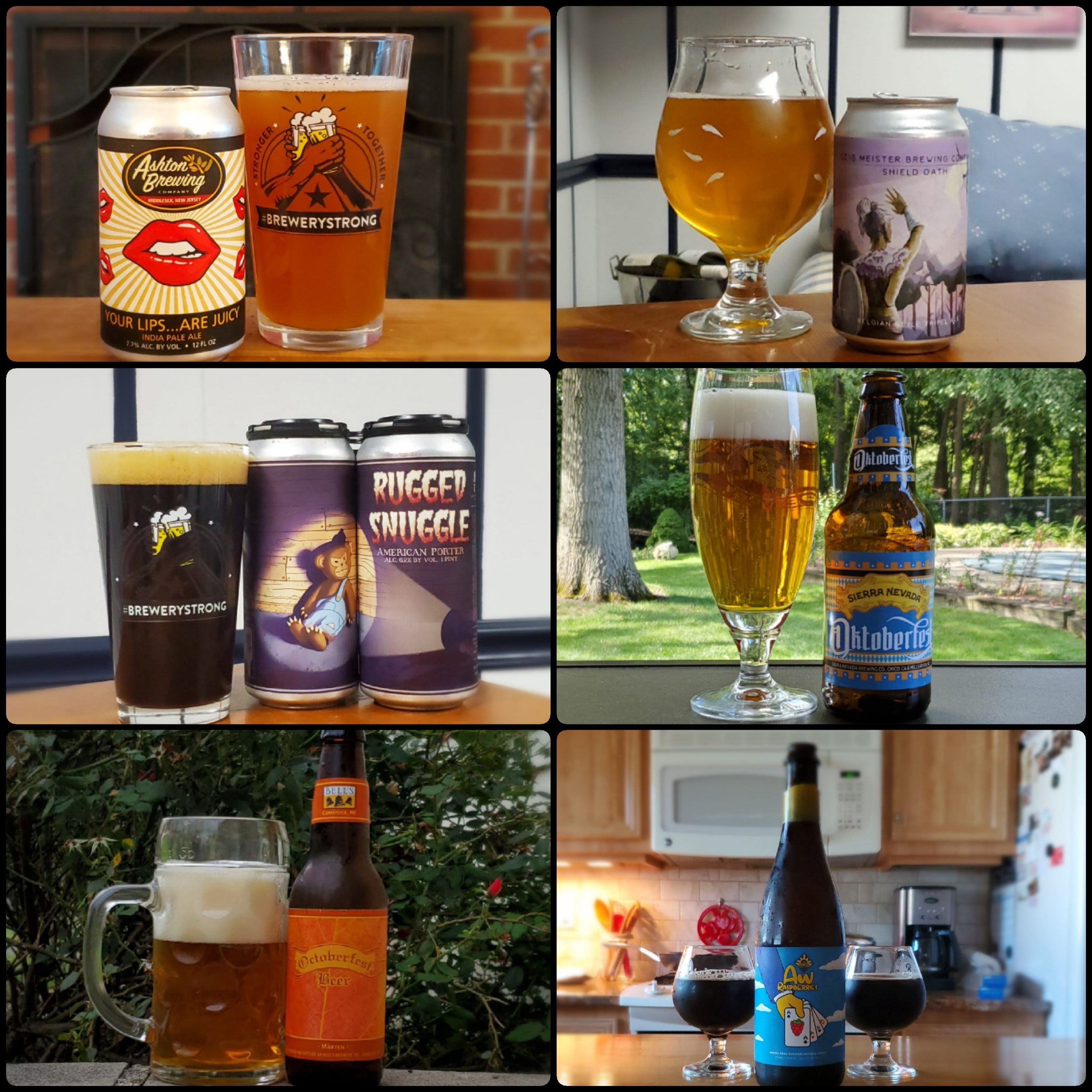
This is the first hop-forward beer I’ve had from Ashton and I’m very impressed. Great hop blend to give the beer the qualities of a big Imperial IPA balanced out with noticeable, and balanced malt character for an overall flavor profile that is delicious. The can says “India Pale Ale,” untappd says “IPA – Imperial/Double,” I say this is a very flavorful, hop forward beer.
This is what I assume is the base beer for Paragon of Light, their wine-barrel aged Tripel and is a very solid interpretation of the Belgian style. It is hard for me not to compare any Tripel brewed in the North East, specifically New Jersey, to River Horse’s classic Tripel and this one stands up just fine. I wouldn’t necessarily say it needs to warm in the glass, but the beer should breathe a little before you dive in and drink it. Once it does, the beer is great with some hints of pear in the fruit evocations from the yeast and mild hops.
I believe Twin Elephant has expanded their production capacity over the last year because they are releasing cans of their beer on a more regular basis. Rugged Snuggle has been in their portfolio for a couple of years so it was nice to see this roasty coffee adjacent porter available in cans. In addition to that fantastic can art by Tom Schmitt, the beer inside is really tasty. Like always with dark beers, a little warmer than fridge temperature is the way I’d recommend enjoying this one to get the best coffee notes.
One of the side effects of the pandemic is that Sierra Nevada, for the first time since 2015, did not collaborate with a German brewery for their annual Oktoberfest release. However, the 2020 version is great. This one leans on the lighter side of the Fall German Lager style as a Festbier, but it is supremely balanced and perfectly delicious. This is no surprise to me because Sierra Nevada does everything very well.
After a couple of years in the NJ market, I finally tried Bell’s take on the fall classic. My only regret is that I hadn’t tried it earlier. Bell’s takes a lighter approach with their Märzen than some of the others I’ve had, but the beer is extremely flavorful. A hint of sweetness and just a very smooth beer that goes down very, very easily. This beer was featured on the untappd podcast recently and was spoken of very highly, a few of my untappd friends had checked the beer in over the last couple of years and the consensus rating was 4 out of 5 bottle caps and I’m happy to say this beer completely lived up to those expectations.
Shocker of shockers, another beer from Icarus. I’ve been sitting on this one for a few months and I wanted to share it for a special occasion. My dad’s birthday fit the bill perfectly and we both thoroughly enjoyed the beer. The maple element in the beer is blended perfectly, as are the fresh raspberries. Those otherwise potent flavors don’t dominate the profile of the beer, which shows how well-made the beer is because raspberries can be very tart and maple can dominate everything. Not to mention the fact that this beer was barrel aged, adding another complex flavor to the beer. Not here, the maple and raspberries are both in harmony with the malt from the base beer as well as the Heaven Hill barrels.
This was a month where it was difficult to trim the amount of good new beers I enjoyed down to only six and no stinkers at all.












 The Tap Takeover